
Myths surrounding the use of personal protective equipment during the COVID-19 pandemic
From the beginning of the COVID-19 pandemic, people became aware of the importance of handwashing, as well as the different types of personal protective equipment, such as procedure masks, N-95 masks, and face shields. The public’s use of this equipment is based primarily on perceptions rather than science, resulting in the creation of myths.
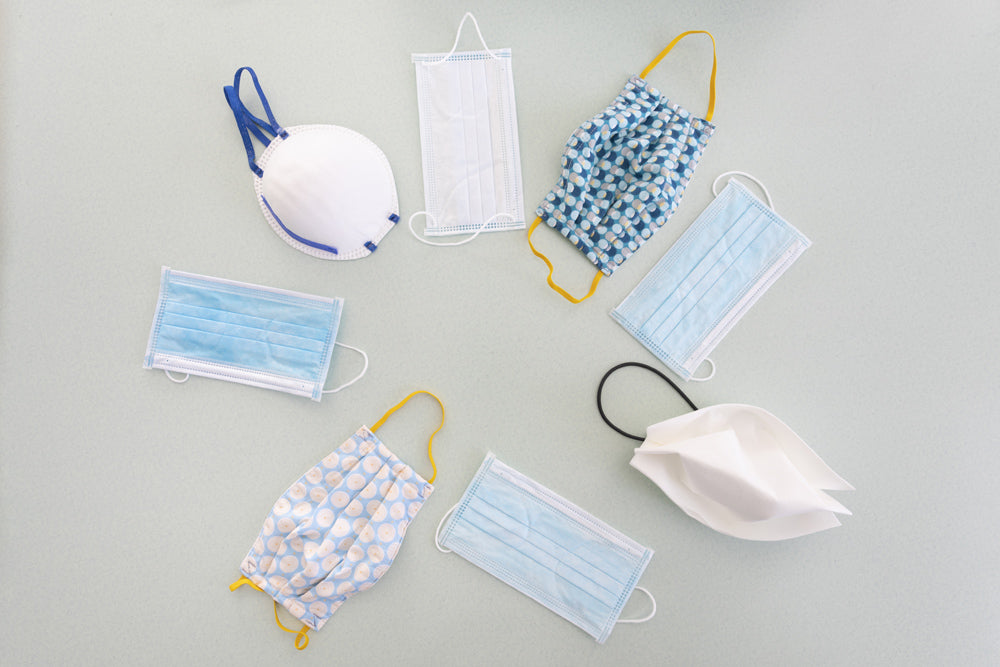
Myths concerning this equipment mainly stem from the fact that it is used in healthcare settings, and members of the public transfer its use to their own circumstances, believing that this equipment offers optimal protection. The main example is the use of the N-95 mask. At the beginning of the pandemic, many people rushed to pharmacies and online sites to purchase N-95 masks. This rush was one of the reasons that caused supply difficulties for hospitals. In fact, purchasing N-95 masks was unnecessary for the general public because, to be fully effective, an N-95 mask must undergo fit testing to adapt it to the wearer’s face. Wearing an N-95 mask that is not properly fitted to the face is equivalent to wearing a procedure mask. This is why N-95 masks should primarily be reserved for people caring for those infected with COVID-19.
Another myth concerns the procedure mask or homemade face covering. Some people believe that these types of masks are useless. It is true that these masks do not provide as much protection as a properly fitted N-95 mask; however, they still form a small barrier that somewhat reduces the inhaled viral load. On the other hand, they remain an important barrier for limiting the emission of potentially contaminated droplets. This barrier is all the more important because there are asymptomatic cases in the population that can spread the virus. Therefore, if everyone observes social distancing and wears a mask, the risk of COVID-19 transmission is greatly reduced.
A third piece of equipment subject to a myth is wearing a face shield alone. In hospital settings, a face shield is worn with a procedure mask or an N-95 mask, depending on the nature of the activities being performed. Some members of the public wear a face shield alone, without a mask, believing that they are thus protected. This measure offers very little protection, both in terms of the risk of emitting the virus and of protecting oneself. However, for the safety of certain workers (because wearing a mask can cause glasses to fog), wearing a face shield alone could be considered a last-resort measure, according to the Institut de Santé Publique du Québec.
In conclusion, these various myths show that, from the beginning of the pandemic, the public lacked adequate basic information about the use of personal protective equipment. The problem today is that these myths persist over time, and improper use of personal protective equipment may contribute to increasing the risk of contracting the COVID-19 virus.
Richard Massicotte
Ph.D./Immunologist